.png)
What 35 Years of Drum Lessons Taught Me About Learning
Updated: Sep 21
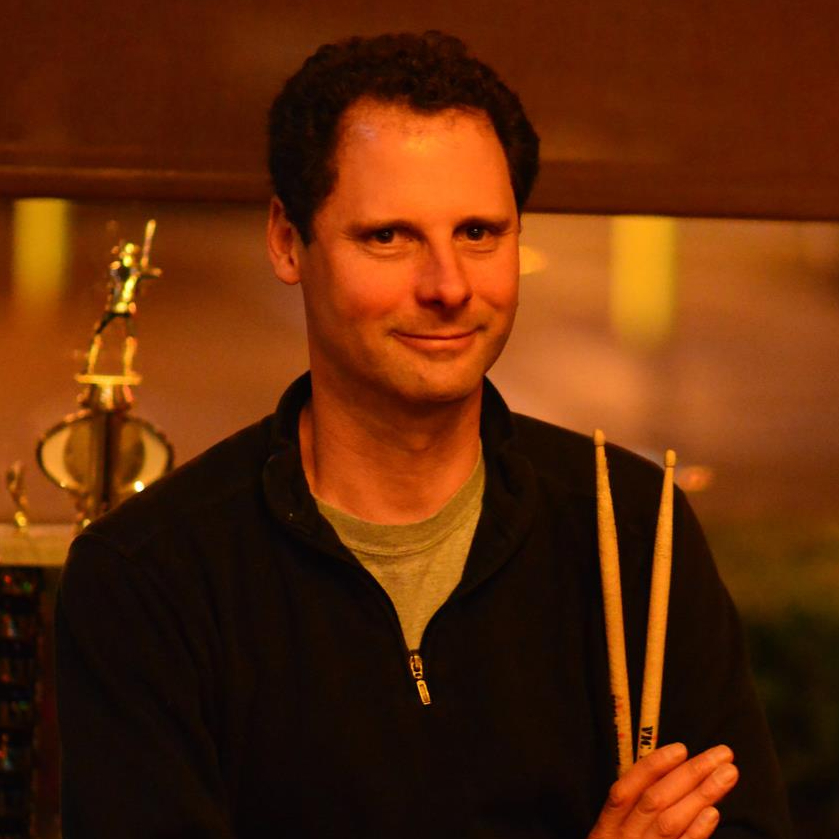
Teaching and playing drums has been my livelihood for 35 years. I love it, and I am grateful every day that I get to do it. Over the years, I have learned a lot, not only about drumming, but also about teaching. In this post, I want to talk about one aspect of my teaching: in order to teach effectively, I first had to figure out how each student learns. That involves working with the student to understand the steps they need to take to learn an assignment and what they should learn from it. The second part is the important one, which I will come back to. Obviously, first we have to learn the assignment.
The Paradiddle: A Simple Example That Is Not So Simple
Take a basic drumming technical exercise: the paradiddle. For anyone unfamiliar, the paradiddle is one of the basic 26 rudiments for drummers. Rudiments are exercises drummers use to help strengthen, maintain, and develop technique, similar to jogging for a basketball player. Most people can play a paradiddle, especially with their hands rather than drumsticks. As a teacher, my job is to find an efficient way for each student to learn it. That may sound silly, but as someone who has taught a paradiddle thousands of times, I can assure you it is not.
A paradiddle is a sticking, an order of hands played at a constant tempo: Right, Left, Right, Right, Left, Right, Left, Left. For now I am leaving accents out. You might think that means we are done, but we are not, because just understanding the sticking is not the point of the assignment. The challenge is playing the paradiddle at an even tempo, without stopping, for an extended period. I would not expect a drum student to do that initially, so during the lesson I have to explain how to practice it correctly so the student can eventually play an in-tempo and even paradiddle.
How Each Student Learns Differently
This is where I have to figure out how each student learns. There are three senses I ask my drum students to use: eyes, ears, and touch. Every student uses a different combination. Some rely heavily on one sense, others use two or three.
For a visual learner, I may write out the sticking and have the student play while looking at it until the pattern becomes familiar. For a drum student who learns audibly, I explain that the word "paradiddle" describes the sticking itself: "para" meaning two single hits (Right, Left), and "diddle" meaning one double (Right, Right). If the student says "paradiddle" while playing, they can hear the pattern. If a student is good at both visual and auditory, I have them look at the sticking and say the word as they play.
There is still the sense of touch. I explain how the drumstick should feel: where it touches their fingers, how it should feel the same in both hands, how the vibration should feel when the stick hits the drum, and how the rebound should feel afterwards. A student who knows how a stick should feel can recognize when something is off and correct it.
This may all sound overcomplicated, but most of the time the student is unaware that I am figuring out their learning style. From the moment a student tries to read a paradiddle, I start observing and adjusting. The whole process happens quickly, and once I know a student, I can go straight to what works best for them.
What You Are Learning Versus What You Are Doing
Earlier I mentioned that it is important for students to know what they are learning from an assignment. If they think the goal of practicing a paradiddle is simply to learn a paradiddle, they are missing the point. A paradiddle, like all drum rudiments, is used to develop technique. A paradiddle specifically develops singles and doubles, two techniques you cannot play drums without. So what the student is really learning is a way to develop singles and doubles. When a student understands that, the exercise becomes a tool for improvement, not just a task to complete.
Pass-The-Assignment Students vs. Real-Improvement Students
This all matters because I have had students who focus on how many assignments they can pass. These students usually improve more slowly than students who focus on what they are actually learning, because they only practice enough to move on. They are not absorbing what the exercise is meant to teach. They do not learn as much, and therefore do not improve as much.
A student who understands what an assignment is supposed to teach can set goals to improve that aspect of their playing. The book, the song, the rudiment becomes a tool to fix or learn something, rather than an object to pass. The goal is to improve their playing. When I assign something, it is never random. Each assignment is chosen to work on a specific part of the student's technique. The goal should not be to pass it quickly, but to learn what it is there to teach.
Try a Free First Lesson
The first lesson is free, on Zoom, FaceTime, or in person at Rudy's studio in Ardsley, NY. Book your free first lesson at rudyfeinauer.com/schedule-lesson.
Related reading
More parent guides from Rudy:


