Why Audition Prep Makes Every Drum Student Better
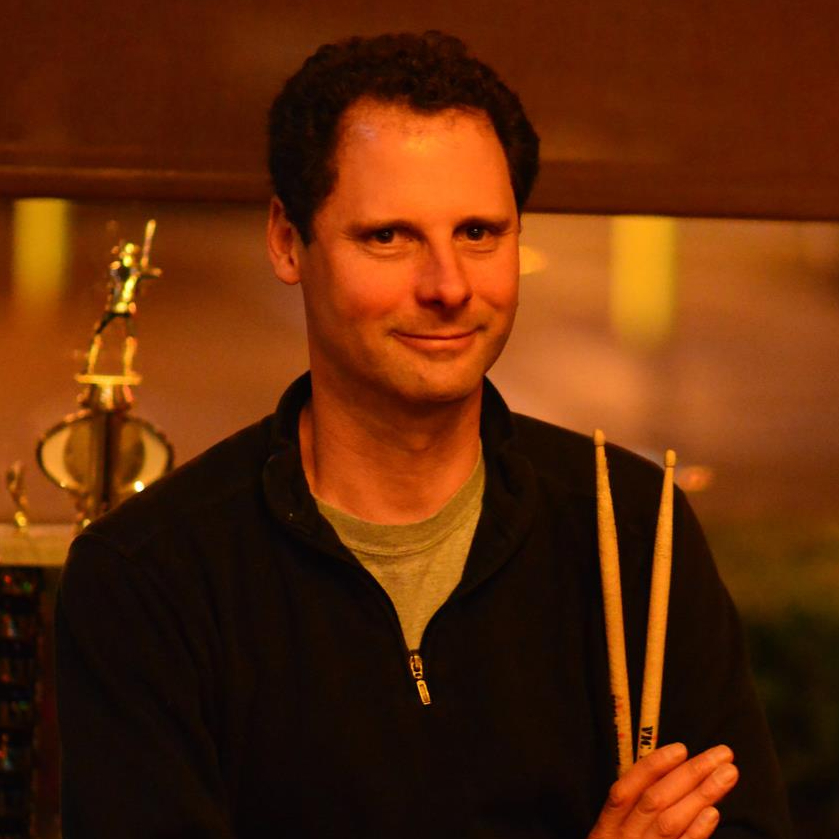
- rileyfeinauer
- May 12
- 7 min read
I've been helping students prepare for auditions for 30 years. NYSSMA evaluations, college auditions, youth orchestra auditions, county and state jazz band tryouts, school band auditions. I've coached drummers through all of them. And after three decades of doing this, I've come to believe that the preparation is more valuable than whatever audition the student is preparing for.
Here's what I mean.
What is NYSSMA, anyway?
For parents and students who haven't run into it yet: NYSSMA stands for the New York State School Music Association. It's a group of music teachers across New York State that hosts an annual music festival for grade school students. At the festival, students get evaluated one on one by a certified adjudicator. During the evaluation, the student performs a prepared solo, demonstrates the required rudiments, and sight reads a piece of music. The adjudicator gives a score. Top scoring students get selected to perform in the all county and all state jazz band, concert band, or orchestra.
Most states have their own version of this. One of my virtual students recently went through North Carolina's festival.
I was a NYSSMA adjudicator myself for several years, so I've sat on both sides of the table. And in every one of those 30 years, I've had students accepted into county or state ensembles.
Why the process matters more than the result
Here's the thing parents don't always realize. Preparing for an audition makes a student better whether or not they get in.
It forces a student to learn proper technique, because there's no faking it in front of a certified adjudicator. It forces them to learn rudiments, which are the building blocks every working drummer needs. It forces them to learn how to read music, because sight reading is required. None of these are things most kids would push themselves to learn without a deadline and a goal attached to it.
So even when a student doesn't make the cut, they leave the process a stronger musician than they were when they started.
I've had students audition knowing they probably wouldn't be accepted. They still wanted to do it because they understood the preparation itself would make them better, and they'd be more ready for the next audition. That's a level of maturity I love to see in a young drummer.
Some of my students go on to top music schools
A handful of my students have continued in music seriously, and that's been one of the most rewarding parts of teaching. Over the years, I've had students accepted to Berklee College of Music, the Manhattan School of Music, the New England Conservatory (my own alma mater), and other top programs. Some of them earned scholarships.
I'm not bringing this up to brag. I'm bringing it up because the path to those acceptances always started with smaller auditions years earlier. NYSSMA, all county, the school's jazz band. That's where the student learned how to prepare, how to perform under pressure, and how to handle whatever the result was.
What I actually teach during audition prep
When I'm preparing a student for an audition, the musical work is only part of what we cover. We also talk about how to dress, because adjudicators are human and first impressions matter. We talk about how to walk in, introduce yourself, and present yourself professionally. WeWhen people ask if virtual drum lessons are as good as in person lessons, I tell them the truth. It depends on the student. But virtual lessons have advantages I didn't expect when I started teaching this way six years ago. After teaching online students from London to Los Angeles, I've changed my mind about what's possible over Zoom or FaceTime.
Here's what I've learned.
Virtual lessons aren't perfect
I'll be honest. Teaching virtually has real challenges. Not being in the same room can make it harder to show certain techniques. With young students, it can be tougher to keep them focused when I can't quietly redirect them in person. A bad internet connection or a cheap microphone can break the flow of a lesson.
But once you find the right setup, virtual lessons can be just as productive as in person ones. Sometimes more so. You need a stable internet connection, a decent camera angle, and a student who's ready to learn. That's really it.
How I started teaching online a year before COVID
I started teaching virtual drum lessons five years ago. A year before the pandemic, actually. One of my long time in person students moved from New York to California and wanted to keep studying with me. So I started teaching him virtually and it worked.
That one student turned out to be the best thing that could have happened to my teaching practice. When COVID hit and every student suddenly needed to go virtual, I was already set up and comfortable with the format. Without that early experience, I would have lost contact with many of my students during the lockdown.
Now I teach students all over the world from my New York studio. I may have an in person student show up at 4pm and then teach a student in London at 5pm. Pretty cool. That's something that was just impossible before video lessons.
Distance stops mattering
The biggest win of virtual lessons is that students who can't come to me in person can still learn from me. Students who live too far away, students who are sick, students whose schedules don't fit my in person availability. None of that matters anymore.
I've taught students in California, London, India, North Carolina, and plenty of other places I've never set foot in. That kind of reach was something I never had as a strictly in person teacher.
Virtual teaching makes me a better teacher
Teaching globally has expanded my own musical world. My students bring me music I would never have discovered on my own. Songs from their cultures, songs from their school bands, songs from genres outside my usual touring work. To help a student learn a song I often have to learn it myself first. Sometimes I'll write out a drum chart so they can read it more easily.
That process has made me a better musician and a more flexible teacher. Without my students, my listening would be limited to whatever I need to learn for my next gig. Instead, I've become a fan of songs I would have never heard otherwise.
It's also forced me to adjust my curriculum constantly. A grade school student in London is studying a different curriculum than one in India or one here in Westchester. Every student needs solid fundamentals. Proper technique, rudiments, reading. Those apply to any good drummer. But after that, I love watching students branch off into the styles they actually want to play, or the styles their school programs need them to know.
Flexible scheduling that helps everyone
Most of my in person students take lessons on weekends, after work, or after school. That's when they're free. Which means the middle of my weekday used to sit empty.
With virtual lessons, that changes. London is five or six hours ahead of New York. So a 10am lesson in my studio is a 3pm lesson in London. Perfectly normal afternoon time for a student there. The same is true for students across other time zones. I can fit more students into my week without anyone having to compromise on the timing.
No travel, no weather cancellations
If you've ever had a child's lesson cancelled because of snow, ice, or traffic, you'll appreciate this one. Virtual lessons happen in any weather. The only time I've ever cancelled a virtual lesson for weather reasons was during a power outage. Apart from that, snow days don't exist.
Students play better when they're relaxed
This is the benefit I noticed almost by accident. Students who take virtual lessons are often more relaxed than students who travel to me. They're in their own home. They're playing on their own instrument that they practice on every day. They're not driving in traffic and then having to perform difficult exercises with no time to warm up.
Relaxed students learn faster. Comfortable students take more risks. Students who feel at home are more willing to try the hard thing.
You can pick the right teacher, not just the closest one
With in person lessons, students are stuck picking teachers within driving distance of their home. That's a pretty small pool. Virtually, students have the world to pick from. They can choose teachers that best teach the genre and the issues they want to work on. They can find teachers with the most experience and personalities they get along with.
That's a huge benefit for the student. And honestly, it's a healthier model for the teacher too. We have to be good to compete in a global market. There's no captive local audience anymore.
Is a virtual drum lesson right for you?
If you have a stable internet connection, your own drum kit (acoustic or electronic, either works), and the focus to sit through 30 to 60 minutes, virtual lessons can work great for you. If you're a parent worrying about whether your younger child can stay focused on a screen, I get it. Sometimes the answer is yes, sometimes it's no. I do a free trial lesson with every new student so we can figure out together whether the format fits.
If you're curious, the first lesson is on me. Book a free virtual drum lesson and let's see if it's a good fit. talk about how to perform under pressure, especially when you're nervous, because there are concrete techniques for managing nerves and they're learnable. And we talk about what to do when something goes wrong mid piece, because something always does, even at the highest levels.
These aren't musical skills. But they're skills the student will use for the rest of their life.
Audition prep is job interview training in disguise
I tell my older students this all the time. An audition is almost identical to a job interview.
In both, you're preparing yourself for someone (or a panel of people) to evaluate you and decide whether you're the right fit for their group, school, or company. You're being judged on your skills, but also on how you carry yourself, how you handle pressure, and how you communicate.
Even if a student decides later that music isn't their career path, the audition preparation skills transfer directly. They'll know how to walk into a room with confidence, perform under stress, and stay composed if something goes sideways. That's worth more than a NYSSMA score.
Why I keep doing this
Watching students get accepted into music schools and state ensembles is one of the most rewarding parts of my job. But the bigger reward, the one that keeps me teaching after 35 years, is watching students improve and hit goals they set for themselves. That's the whole reason I started teaching in the first place.
If your child is preparing for a NYSSMA audition, a county or state jazz band tryout, or thinking about applying to a music school down the road, I'd love to help. The first lesson is free, in person or virtually.
Book a free first lesson with Rudy.
.png)

Comments